Tools
Kipferl
Write Python-style code, hand someone one small executable.
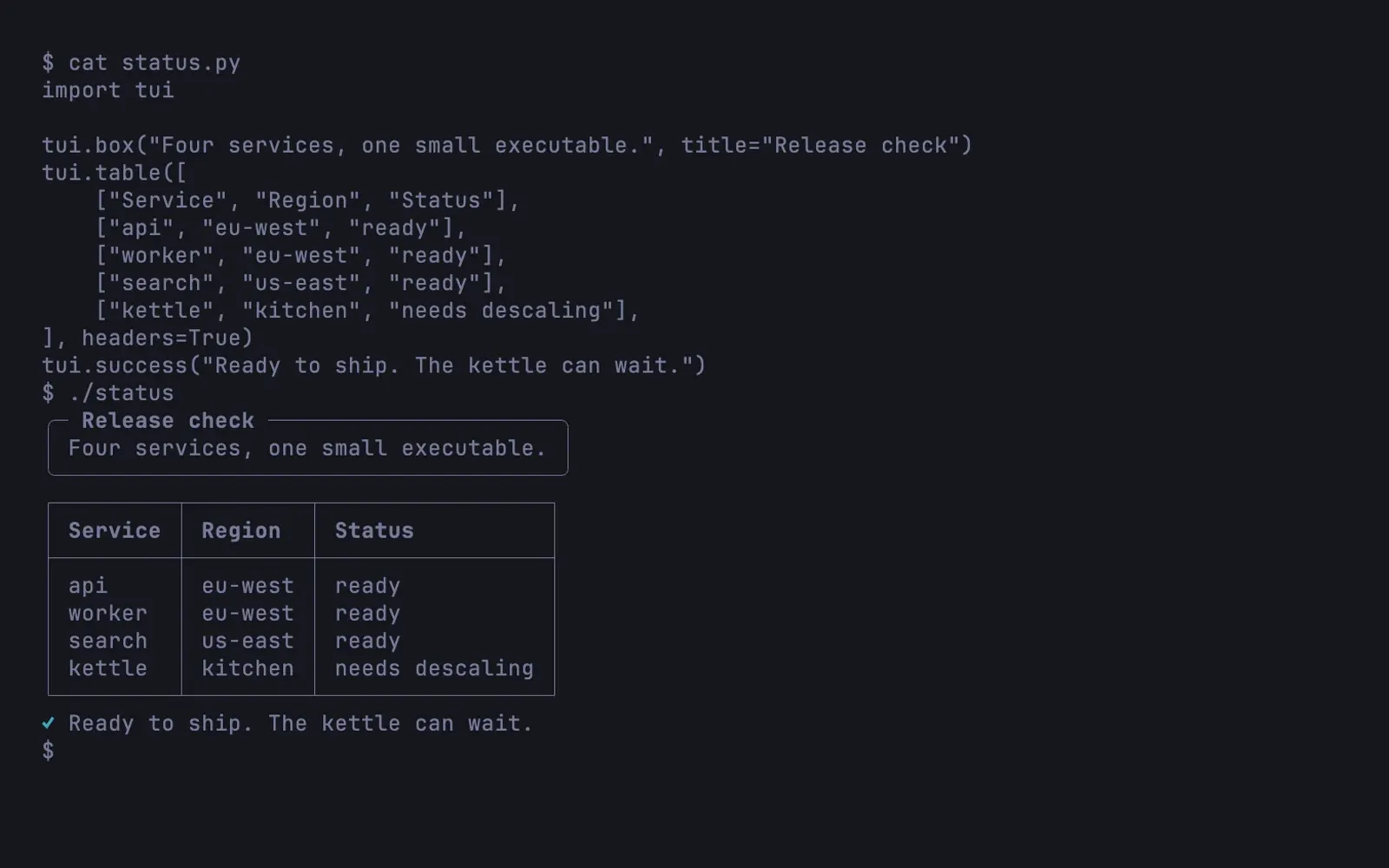
Python is the language I get small things done in fastest. Handing one of those small things to somebody else is where it stops being small: they need the right Python, a virtual environment, and a short lecture about pip.
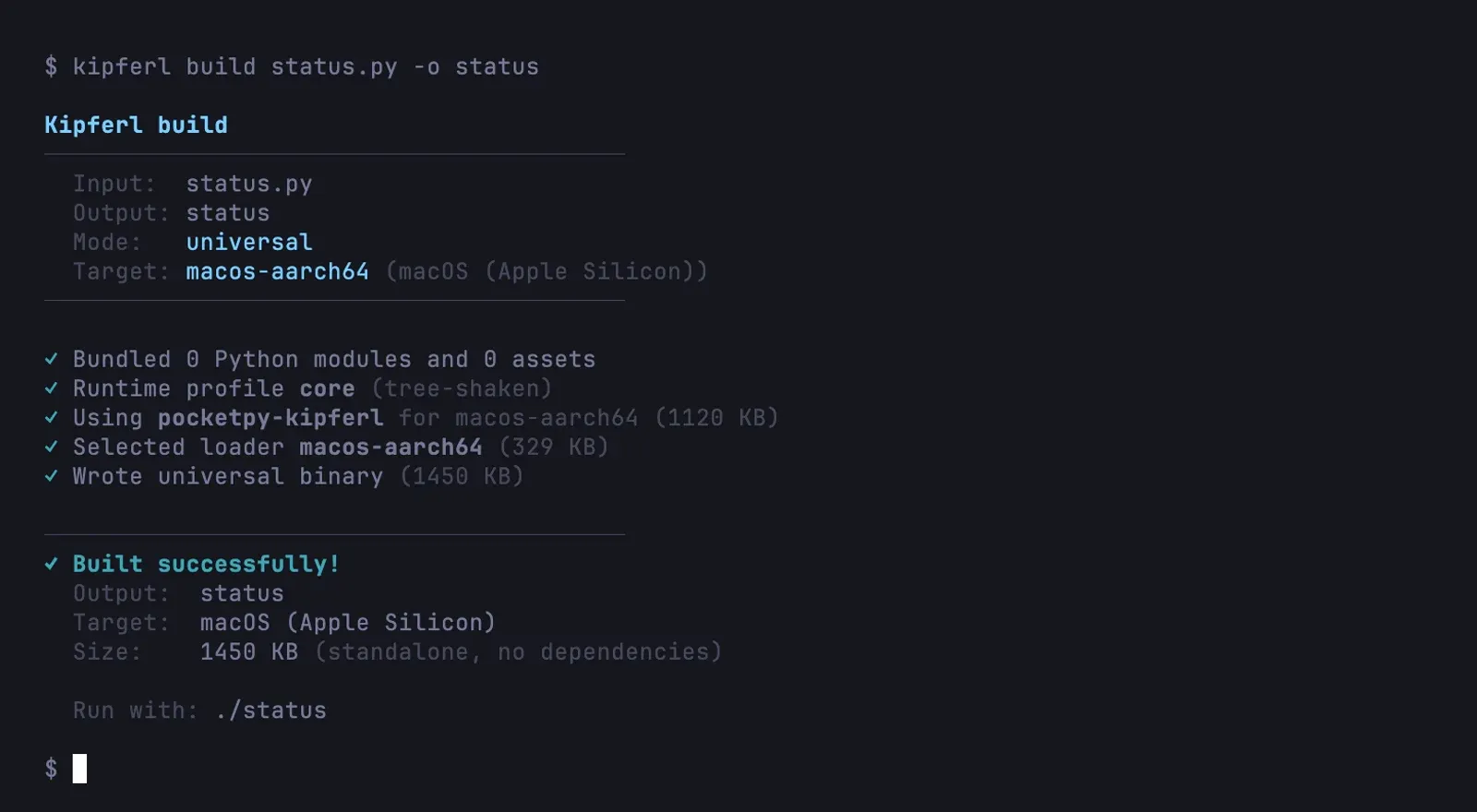
Kipferl is my answer for command-line tools. You write Python-style code, and kipferl build turns it into one executable for macOS or Linux, on ARM64 or x86_64. The status app in the picture builds to about 1.4 MB. Whoever runs it needs neither Kipferl nor Python.
It gets there by not being CPython. Kipferl embeds PocketPy, a small Python implementation, in a Rust host, and adds a curated set of modules aimed at CLIs: boxes, tables, prompts and progress output. At build time it looks at what your program imports and picks a trimmed runtime profile when it can, or the full one when it must. That trade-off is the whole point. You get a focused way to write tools, and not every package on PyPI will work.
For the packages that do, there is a checked path. kipferl add resolves pure-Python wheels, checks their source with the embedded runtime, and records exact versions and hashes in a lock file. Unknown packages stay marked as unverified until you decide otherwise. Projects start from templates, kipferl dev restarts the app while you edit, and kipferl test runs the tests.
The project started in December 2025 as μcharm, with a Zig host. Since then it has swapped its embedded Python runtime once and its host language once, from Zig to Rust, while the Python-facing side stayed the same. The website has the documentation, a compatibility guide for packages, and release notes with dated measurements.
Gallery
Highlights
- One executable, no Python install needed
- Boxes, tables and prompts built in
- PyPI packages checked before they ship