Tools private
Postcard
A day of travel footage, cut into a short music video.
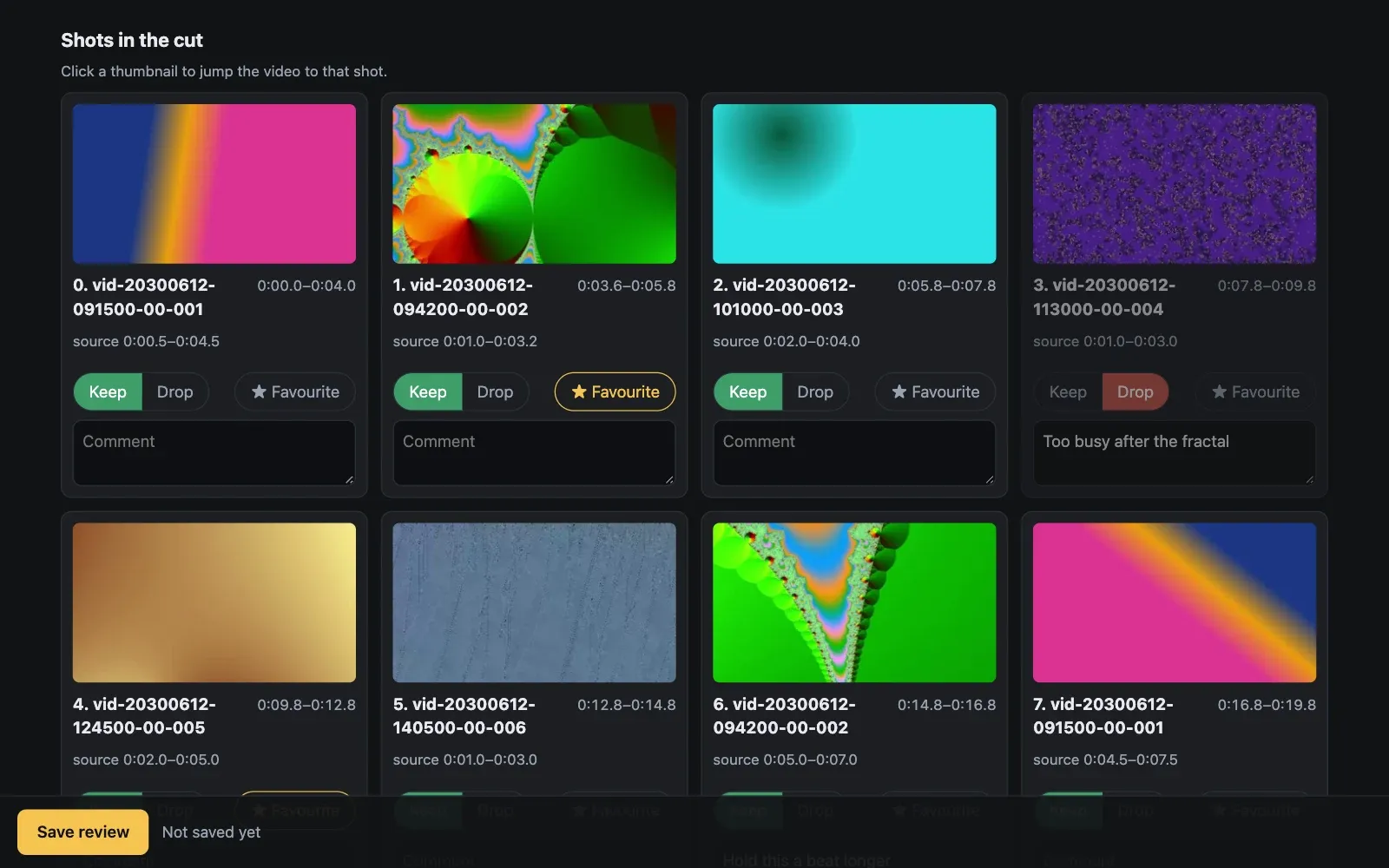
After a day of filming on a trip I have dozens of clips and no evening left to edit them. Postcard turns one day of footage into a 60 to 90 second highlight with a title and cuts that land on the beat of the music.
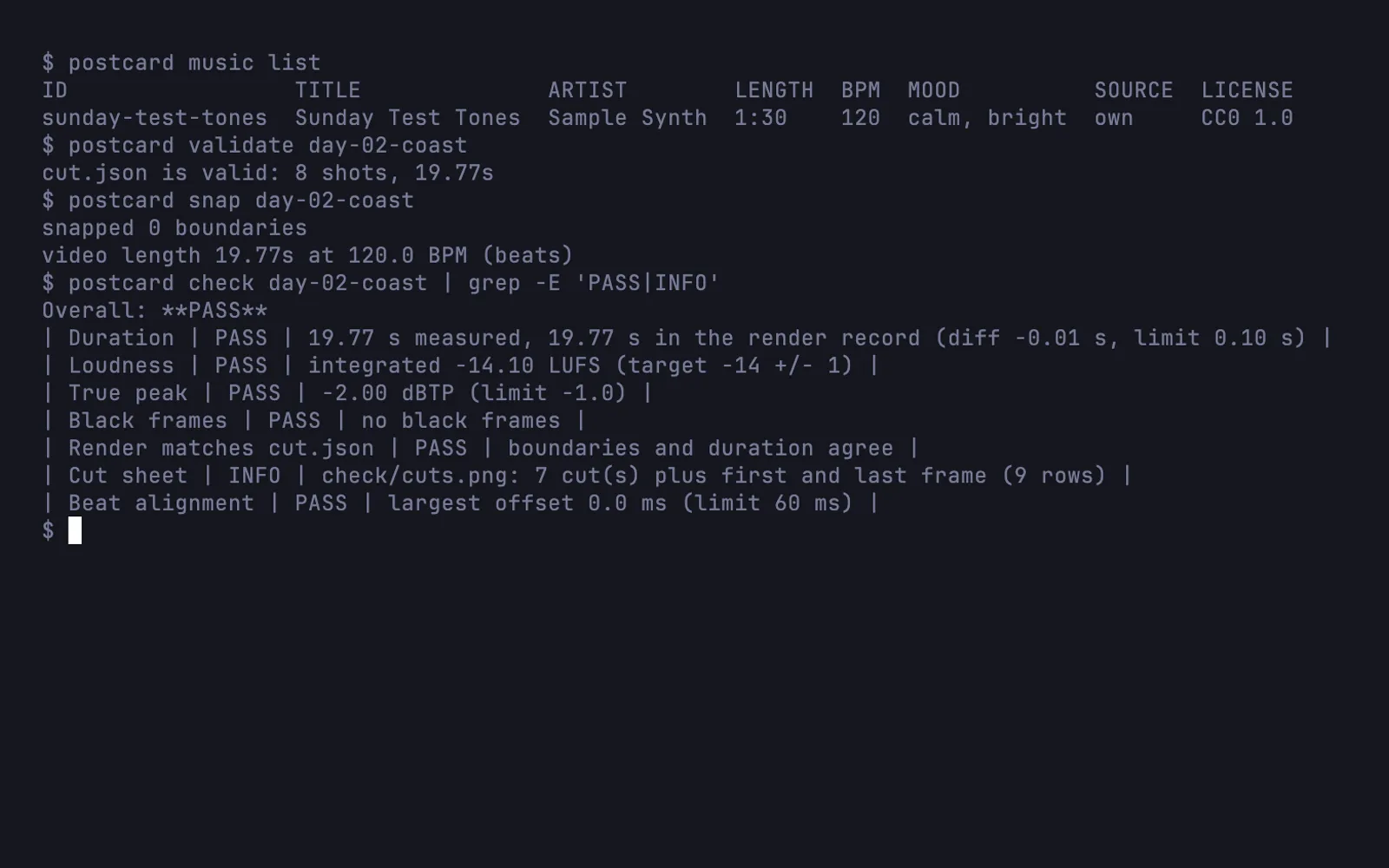
The work is split in two. A Python command-line tool does everything that has to be exact: it probes the clips, builds proxies, finds and measures shots, detects the beats in a track, renders and checks the result. Claude Code is the editor. It looks at contact sheets of the day, picks the moments and the music, and writes the edit as a cut.json file. The CLI validates that file, moves cut points onto beats or bars, renders a preview and measures it: duration, loudness, true peak, black frames and how far each cut is from the beat. Claude also looks at a sheet of the frames around every cut before showing me anything.
Then I react in plain words, like “shorter opening”, or open a small local review page to keep, drop or favourite each shot. Once I approve, Postcard renders the final video, writes a YouTube description with the music credits and adds the day’s best shots to an index for the whole trip. It never uploads anything.
Music is where I wanted it strict. Every track in the library records its source and licence, rendering refuses a track without one, and required credits go into the description word for word. Tracks can also be generated locally with ACE-Step.
It runs on a Mac with stock Homebrew ffmpeg, converts HDR footage to SDR, and can export timelines for Final Cut Pro and DaVinci Resolve when an edit needs a human hand.
The pictures come from a day of invented footage: generated gradients and fractals with a synthetic test-tone track.
Gallery
Highlights
- Cuts land on beats or bars
- Refuses music without a licence
- Checks loudness, peaks and black frames